
Owning a piece of waterfront property is a dream that millions of people share, representing the ultimate culmination of hard work and a deep appreciation for the outdoors. There is an undeniable magic to waking up, walking out your back door with a cup of coffee, and having immediate, unrestricted access to the open water. It offers a lifestyle defined by spontaneous sunset cruises, weekend fishing expeditions, and the creation of generational memories with family and friends. However, the romanticized vision of waterfront living often obscures the rigorous, demanding reality of maintaining it.
The marine environment is one of the most hostile, corrosive forces on the planet. Constant exposure to the baking sun, driving rain, relentless wave action, and the highly corrosive nature of saltwater or mineral-heavy freshwater ruthlessly degrades physical structures and fiberglass over time. A setup that is neglected will quickly become an expensive, hazardous eyesore. True waterfront luxury is not just about having a slip for a vessel; it is about engineering a seamless, durable ecosystem that protects your investments and enhances your time on the water.
If your current setup is showing its age, embarking on a comprehensive upgrade requires a holistic, phased approach. You cannot simply patch a few rotting boards or slap a new coat of wax on an old hull and expect long-term reliability. To build an oasis that lasts, you must critically evaluate the performance of your watercraft, restore its aesthetic and functional condition, design resilient infrastructure capable of withstanding severe weather, and install the necessary hardware to protect everything from the elements. This guide will walk you through the essential, step-by-step process of transforming a tired shoreline and an aging vessel into a premium, stress-free launching pad for your nautical adventures.
Assess Your Current Watercraft’s Performance and Power Requirements
Before you allocate a massive budget toward structural upgrades along your shoreline, you must take a step back and objectively evaluate the vessel that will be tied to it. The centerpiece of your waterfront lifestyle is the watercraft itself. As families grow, interests change, and technology advances, the vessel you purchased a decade ago might no longer serve your primary needs. You must determine if your current hull is worth heavily investing in, or if it is time to start fresh.
Evaluating your current setup begins with understanding how you plan to use the water for the next five to ten years.
- The Usage Audit: Are you primarily taking slow, evening cruises with a large group of friends? If so, an older, narrow center console might feel cramped, and a pontoon might be a better fit. Conversely, if your children have grown and are now interested in competitive wakeboarding or offshore fishing, that old pontoon will severely limit your capabilities.
- Repowering vs. Replacing: If the layout and structural integrity of your current fiberglass hull are perfect, but the engine is constantly leaving you stranded, repowering is a mathematically sound option. Modern four-stroke engines offer dramatic improvements over older two-stroke models. They run virtually silently, produce zero smoke, and boast fuel economy numbers that can cut your seasonal gas bill in half. However, dropping a brand-new engine onto a twenty-year-old transom with hidden rot is a dangerous waste of capital.
- Mechanical Diagnostics: Before deciding to keep your current engine, have a certified marine mechanic perform a compression test and a leak-down test on the cylinders. These tests act as a physical for your motor, revealing the internal health of the engine block and indicating whether a catastrophic failure is imminent.
If the diagnostics reveal that your current motor is on its last legs, but your hull is sound, scheduling a consultation with a specialized outboard dealer can help you determine the exact horsepower, shaft length, and rigging requirements needed to safely repower your specific transom. They can guide you through the transition from mechanical cables to modern digital throttle and shift systems. On the other hand, if your family has simply outgrown the layout of the hull entirely, spending an afternoon browsing the inventory at a reputable local boat dealership will give you a realistic idea of the current market value of your trade-in and help you visualize the modern amenities available on newer models.
Revitalize Your Hull and Upgrade Onboard Electronics
Once you have decided to keep and upgrade your current vessel, your immediate focus should shift to restoring its physical condition and modernizing its capabilities. A watercraft that lives in the sun is highly susceptible to severe gelcoat oxidation. Over time, UV rays break down the protective layer of the fiberglass, leaving the hull looking chalky, faded, and neglected. Many owners mistakenly believe that the color has faded permanently, but in most cases, the vibrant original color is still there, trapped just beneath a microscopic layer of dead gelcoat.
You can perform a simple “water test” to determine the true potential of your hull. Splash a bucket of water onto the most heavily oxidized section of the fiberglass. For the few seconds that the surface is wet, the chalkiness will disappear, and you will see the exact color and depth that can be restored through professional intervention.
Restoring and modernizing the vessel involves a meticulous, multi-step process:
- Heavy Compounding: This is the aggressive first step where a rotary buffer and a gritty, abrasive compound are used to physically cut away the dead, oxidized layer of gelcoat.
- Polishing and Glazing: Once the dead layer is removed, a finer polish is applied to smooth out the microscopic scratches left by the compound, restoring the mirror-like depth and shine to the fiberglass.
- Advanced Surface Protection: In the past, owners relied on carnauba wax, which melts away under the harsh summer sun in a matter of weeks. Today, the industry standard is applying a marine-grade ceramic coating. This liquid polymer chemically bonds to the pores of the gelcoat, creating an ultra-hard, hydrophobic shield that protects against UV damage, hard water spots, and salt spray for years.
- Electronic Overhauls: A beautiful hull is useless if you are navigating blindly. Upgrading your helm by removing analog gauges and out-of-date fishfinders is crucial. Modernizing means installing multi-function touchscreen displays that integrate your GPS, 3D sonar, radar, and engine data into a single, seamless NMEA 2000 network.
Because the compounding and polishing process requires specialized high-speed rotary buffers that can easily burn through the gelcoat if handled improperly, it is highly advisable to hire a professional boat detailing service at the beginning of the season to ensure the job is done safely and flawlessly. While the aesthetics are being handled, you can focus on outfitting the interior. Investing in high-quality boat accessories, such as a custom-stitched bimini top for heavy shade, marine-grade synthetic teak flooring that won’t absorb heat, or an upgraded waterproof sound system, will dramatically elevate the comfort and enjoyment of every hour you spend on the water.
Design a Resilient Waterfront Structure Using High-Grade Materials
With your vessel fully restored and modernized, it is time to turn your attention to the shoreline. The infrastructure you build to access your watercraft is arguably the most critical component of your waterfront property. A poorly designed structure will not only be difficult to use, but it will eventually succumb to the relentless forces of nature, potentially damaging your vessel in the process. When designing a new waterfront structure, you are not just building a patio over the water; you are engineering a marine foundation.
The biggest mistake property owners make is designing their structure based solely on the water level observed on a calm, sunny afternoon. You must account for the extremes. You need to calculate the lowest possible draft during a winter drawdown or low tide to ensure your vessel won’t be grounded. More importantly, you must calculate the highest possible storm surge and the localized wave energy produced by heavy wind or passing wakeboard vessels.
Selecting the right materials for this harsh environment dictates the lifespan of the project:
- The Foundation: The pilings are the bedrock of your structure. Traditional pressure-treated wooden pilings must be driven deep into the substrate to resist the upward pull of ice (in northern climates) or the shifting sands of a tidal zone. In highly corrosive environments, upgrading to steel pilings coated in marine-grade epoxy, or utilizing concrete-filled PVC sleeves, can drastically increase the lifespan of the foundation.
- The Framework: The joists and stringers that support the walking surface must be through-bolted with heavy-duty, hot-dipped galvanized or stainless steel hardware. Standard deck screws will rust and shear off within a single season over saltwater.
- The Decking Surface: The walking surface takes the brunt of the abuse from the sun and foot traffic. Traditional pressure-treated pine is cost-effective but requires constant staining and sealing to prevent splintering and warping. Premium hardwoods like Ipe are incredibly dense and naturally resistant to rot, but they are expensive and difficult to tool. Modern composite and PVC decking has become the gold standard, offering a splinter-free, slip-resistant surface that never requires painting and remains cool to the touch.
Because the structural demands of a marine environment are so unique and heavily regulated by local environmental agencies, it is imperative to hire contractors who specialize in custom boat docks to navigate the permitting process and engineer a layout that perfectly accommodates your vessel’s beam and draft. Furthermore, to ensure the structural integrity of the submerged framework, you must source your timber through specialized marine lumber services that provide wood treated with the precise chemical retention levels mandated for continuous saltwater or freshwater immersion.
Elevate Your Vessel to Prevent Hull Degradation
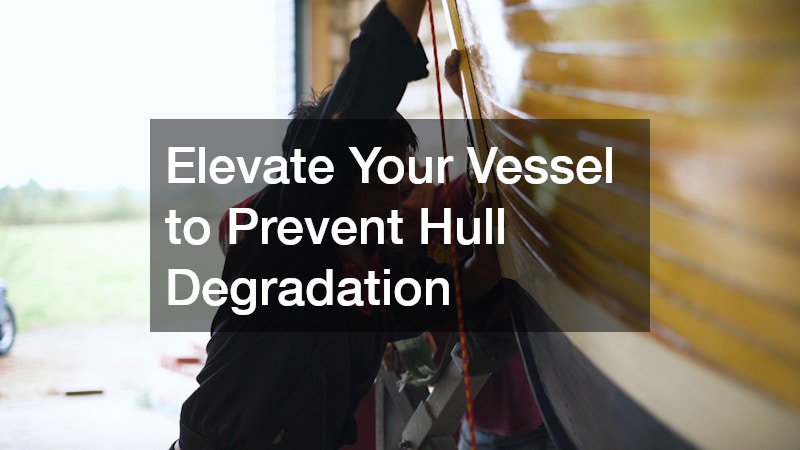
Building a beautiful structure to tie your vessel to is only half the battle. If you leave your watercraft floating in the water year-round, you are subjecting it to an onslaught of environmental hazards that will rapidly destroy its performance and value. The most critical upgrade you can make to your waterfront property is implementing a system to remove the vessel from the water entirely when it is not actively being used.
Leaving a fiberglass hull constantly submerged leads to a phenomenon known as osmotic blistering. Water molecules are small enough to slowly migrate through the microscopic pores of the gelcoat. Once trapped inside the fiberglass matrix, the water reacts with the chemicals in the resin, expanding and creating large, highly destructive blisters that can compromise the structural integrity of the hull. Additionally, submerged hulls become immediate breeding grounds for algae, barnacles, and zebra mussels. Just a few weeks of marine growth can create enough hydrodynamic drag to slash your top speed by twenty percent and drastically increase your fuel consumption. In saltwater environments, leaving the lower unit of your outboard motor submerged also invites aggressive galvanic corrosion, which eats away at the aluminum components of your engine.
To completely mitigate these risks, you must hoist the vessel into the air.
- Calculating Capacity: You must determine the accurate “wet weight” of your vessel. Do not rely on the dry weight listed in the manufacturer’s brochure. You must add the weight of a full tank of fuel (at roughly six pounds per gallon), the weight of your gear, anchors, coolers, and an allowance for rainwater that might accumulate in the bilge. You should always oversize your hoisting mechanism by at least twenty percent to provide a safe margin of error.
- Traditional Cable Systems: These systems use a cradle attached to stainless steel cables that are wound around a motorized drive pipe. They are reliable and cost-effective but require regular inspection of the cables for fraying or rust, as a snapped cable will result in the vessel dropping violently.
- Hydraulic Systems: The modern standard utilizes heavy-duty hydraulic cylinders to push the cradle up from below. These systems have no cables to snap, operate almost silently, and can lift a vessel out of the water in a fraction of the time it takes a traditional motorized pulley system.
Installing these heavy-duty hoisting mechanisms requires deep structural integration with the pilings of your waterfront architecture. There are specialized configurations for shallow water, deep water, and even setups that utilize floating pneumatic tanks for areas where driving pilings is prohibited. Because the safety of your vessel relies entirely on the engineering of this equipment, you must heavily research different boat lift companies to review their warranty periods, their track record in your specific region, and their emergency maintenance response times before committing to a purchase. When correctly installed, heavy-duty boat lifts are the ultimate insurance policy, keeping your hull pristine, your lower unit dry, and your mind at ease during severe weather.
Install Protective Hardware and Establish a Maintenance Schedule
The final phase of upgrading your waterfront setup is accessorizing the structure for safety, convenience, and long-term protection. A naked wooden structure is a hazard to both the people walking on it and the watercraft attempting to dock against it. A sudden gust of wind or an unexpected wake from a passing ship can easily slam a vessel against an unprotected piling, resulting in shattered fiberglass and splintered wood. Proper perimeter protection is an absolute necessity.
To create a safe harbor for your vessel, you must install a comprehensive bumper system.
- Perimeter Protection: Do not rely on tying loose fenders to the side of your vessel. You should install heavy-duty, UV-resistant PVC edge bumpers along the entire length of the boarding area. For the outer pilings, vertical piling bumpers are necessary to accommodate the fluctuating height of the watercraft as the tide rolls in and out.
- Corner Wheels: The corners of your structure are the most dangerous points during a difficult docking maneuver. Installing large, inflatable corner wheels allows a vessel that comes in too hot to literally roll off the corner, deflecting the kinetic energy rather than absorbing a hard impact.
- Cleat Placement: Mooring cleats must be through-bolted directly into the structural stringers, not just screwed into the top decking boards. A heavy vessel surging in a storm can easily rip a cleat out of a single deck board, sending the vessel drifting down the river.
Beyond physical protection, you must account for utility and visibility. Installing solar-powered piling caps provides gentle, ambient illumination that makes navigating back to your property at night safe and stress-free without requiring complex electrical wiring over the water. For larger vessels that remain in the water, installing a dedicated shore power pedestal allows you to keep the onboard battery chargers, bilge pumps, and refrigerators running seamlessly.
Sourcing these finishing touches requires shopping at a specialized retailer, as the hardware found at a standard home improvement store will quickly rust and fail. Acquiring commercial-grade boat dock supplies, from hot-dipped galvanized lag bolts to heavy-duty mooring whips, ensures that every component of your waterfront oasis can withstand the harsh marine environment. Finally, to ensure your completely upgraded setup remains in turnkey condition, you must adopt a proactive mindset toward upkeep. Just as you maintain the wooden decking, you must schedule routine boat service with your marine mechanic every 100 hours of engine runtime, ensuring that your motor’s water pumps, lower unit gear lube, and fuel filters are consistently refreshed, guaranteeing your newly upgraded vessel is always ready the moment the water calls.
Conclusion
Transforming your waterfront property into a highly functional, visually stunning, and structurally resilient oasis is a monumental undertaking. It requires a significant investment of time, capital, and strategic planning. The marine environment offers no grace period for poor engineering or neglected maintenance. By taking a proactive, comprehensive approach to your upgrades, you ensure that the elements work for you, rather than against you.
The journey from a deteriorating shoreline to a premium nautical launching pad is accomplished through a logical progression of essential steps. By objectively evaluating and repowering your watercraft, meticulously restoring its hull, engineering a foundation that can withstand the harshest storms, and implementing hoisting systems to protect your assets, you effectively bulletproof your waterfront lifestyle.
While the planning, permitting, and construction phases can be arduous, the resulting peace of mind is immeasurable. When the wind howls and the storms roll in, you can rest easy knowing your vessel is safe and your infrastructure is secure. More importantly, when the sun shines and the water is calm, you will have created the perfect, stress-free environment to immediately cast off the lines and do what you truly set out to do: enjoy the water. Take the first step today by auditing your current setup, and begin the exciting process of building a legacy that your family will enjoy for decades to come.